
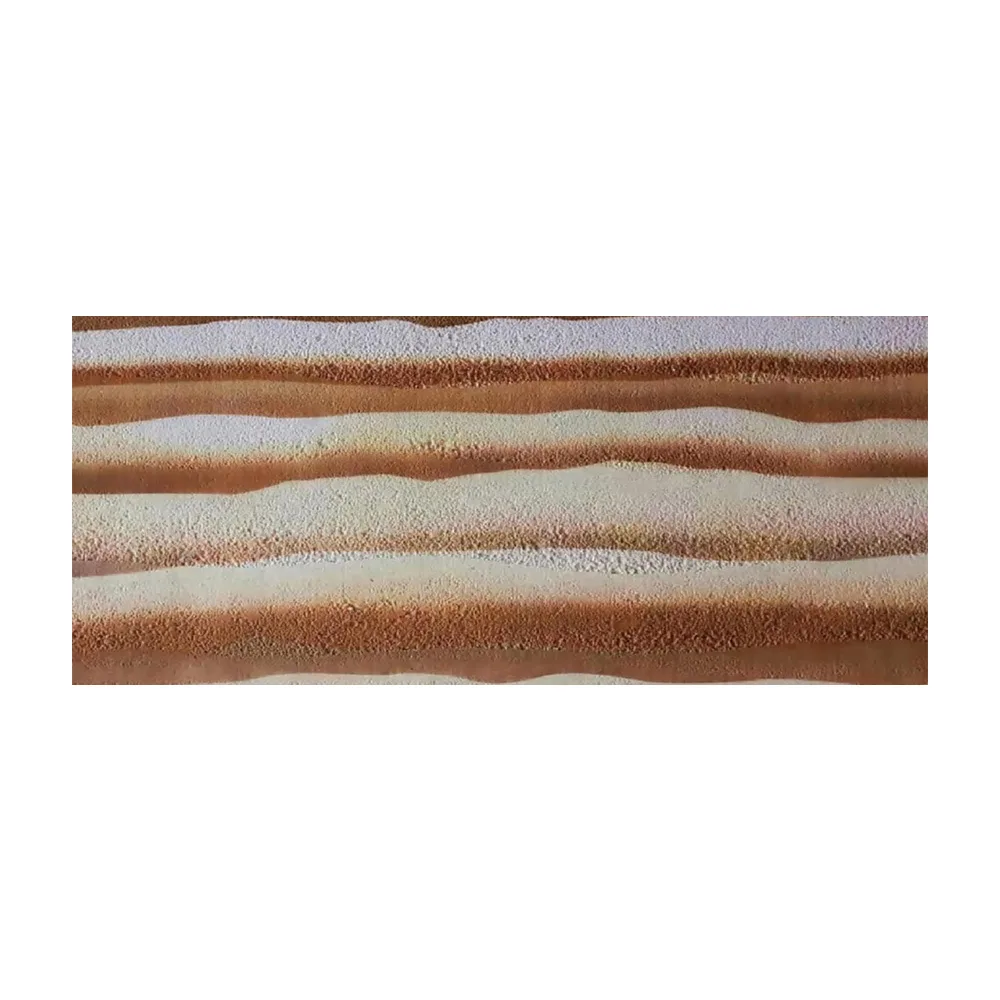
HT4A4001
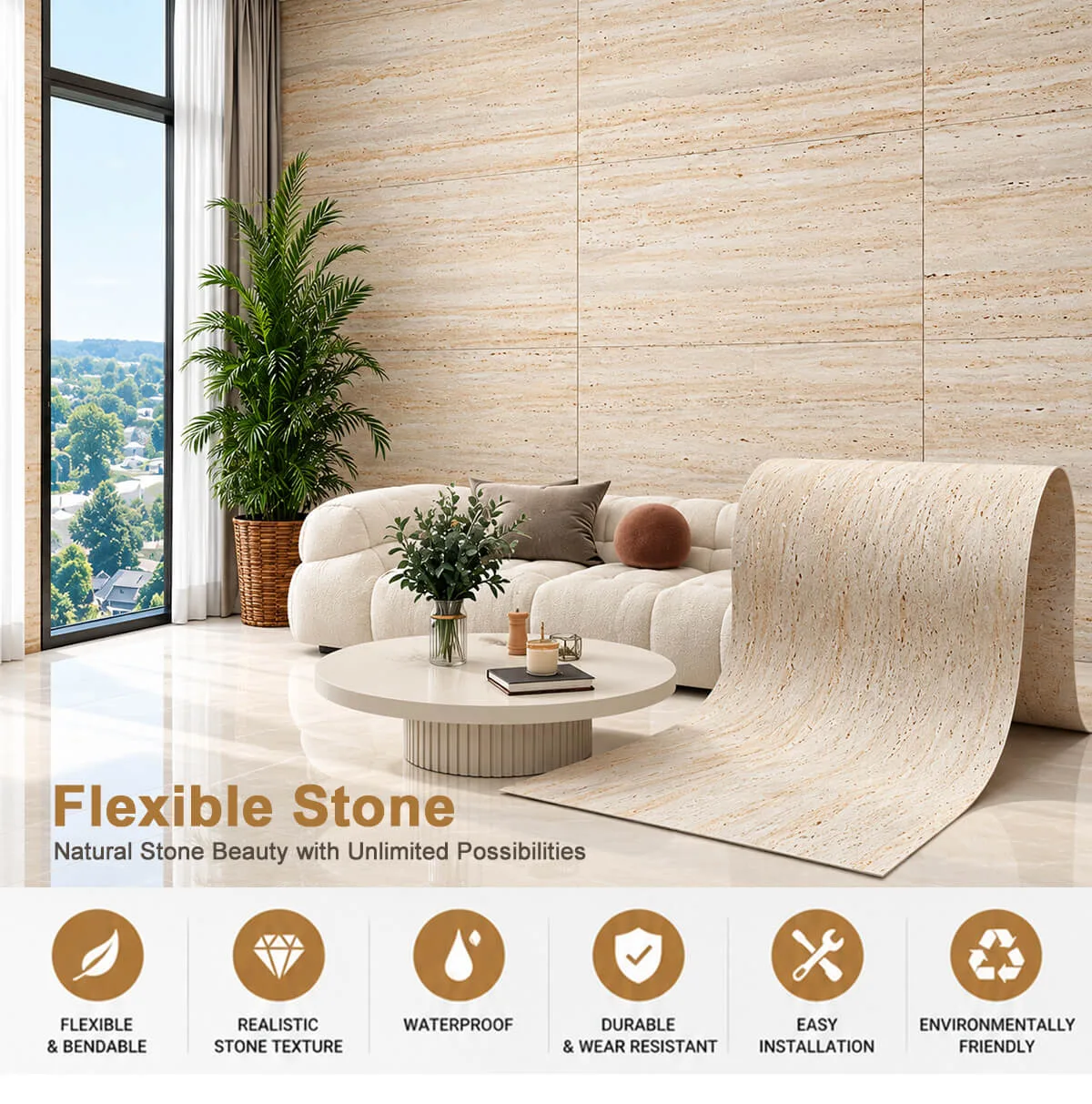
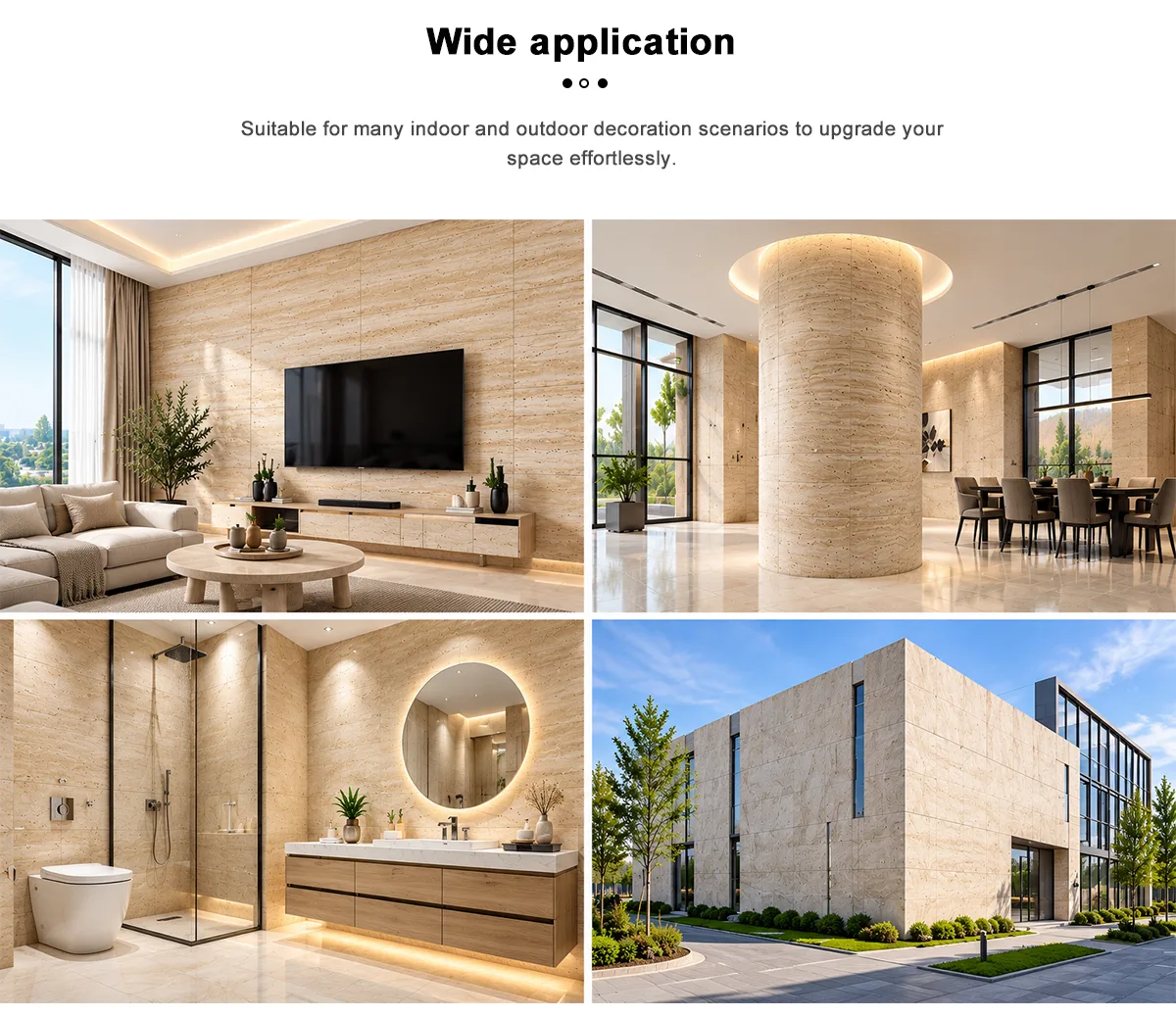
Flexible stone, also known as flexible tile. soft tile or bendable tile, is an innovative building material that redefines traditional ceramic or stone tiles. Unlike rigid tiles, it is crafted from composite materials—typically a blend of polymers (e.g., PVC, PE), natural minerals (such as calcium carbonate, quartz powder), and functional additives. This composition gives it exceptional flexibility, allowing it to bend, curve, or conform to irregular surfaces while maintaining durability and aesthetic appeal.
Key Components & Manufacturing:
1. Polymer Base:
PVC/PE Matrix: Provides flexibility and resilience, enabling the tile to bend without cracking.
Plasticizers: Adjust the material’s softness to suit different installation needs.
2. Mineral Fillers:
Calcium Carbonate/Quartz Powder: Enhances density, hardness, and texture to mimic natural stone or ceramic.
3. Functional Additives:
Stabilizers: Prevent aging from heat or UV exposure.
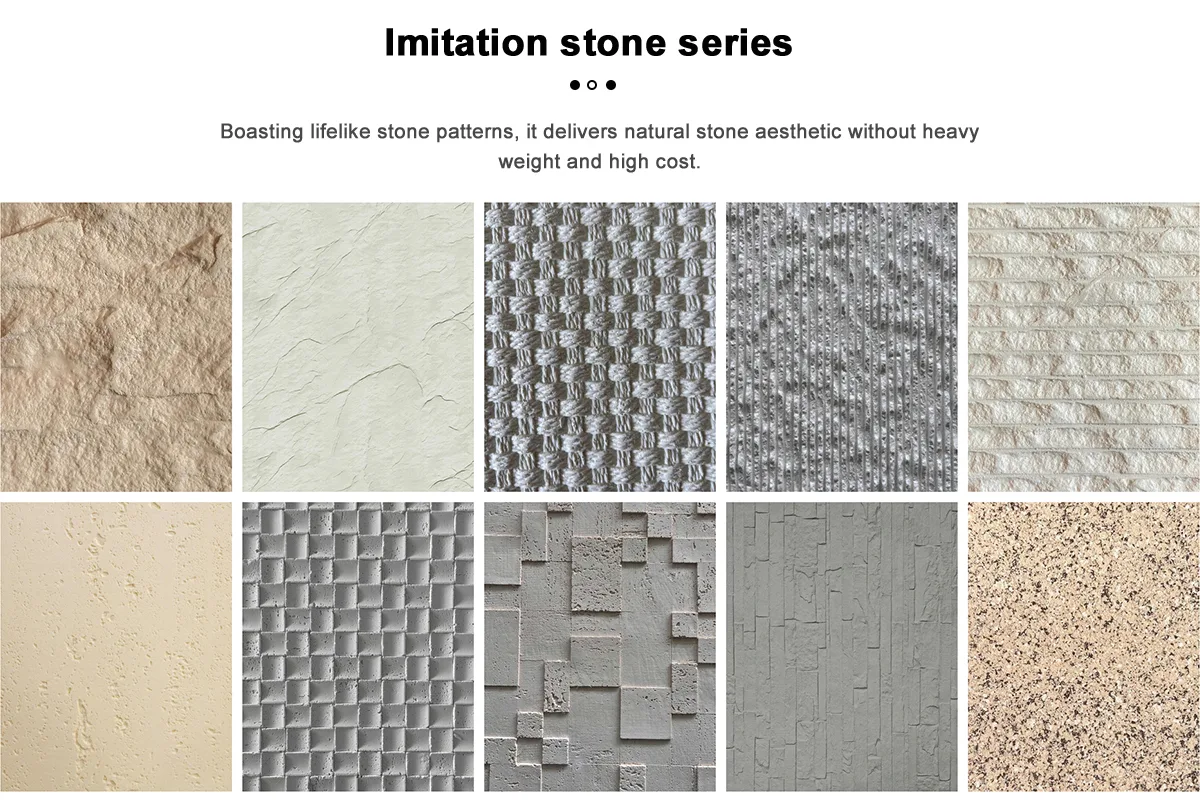
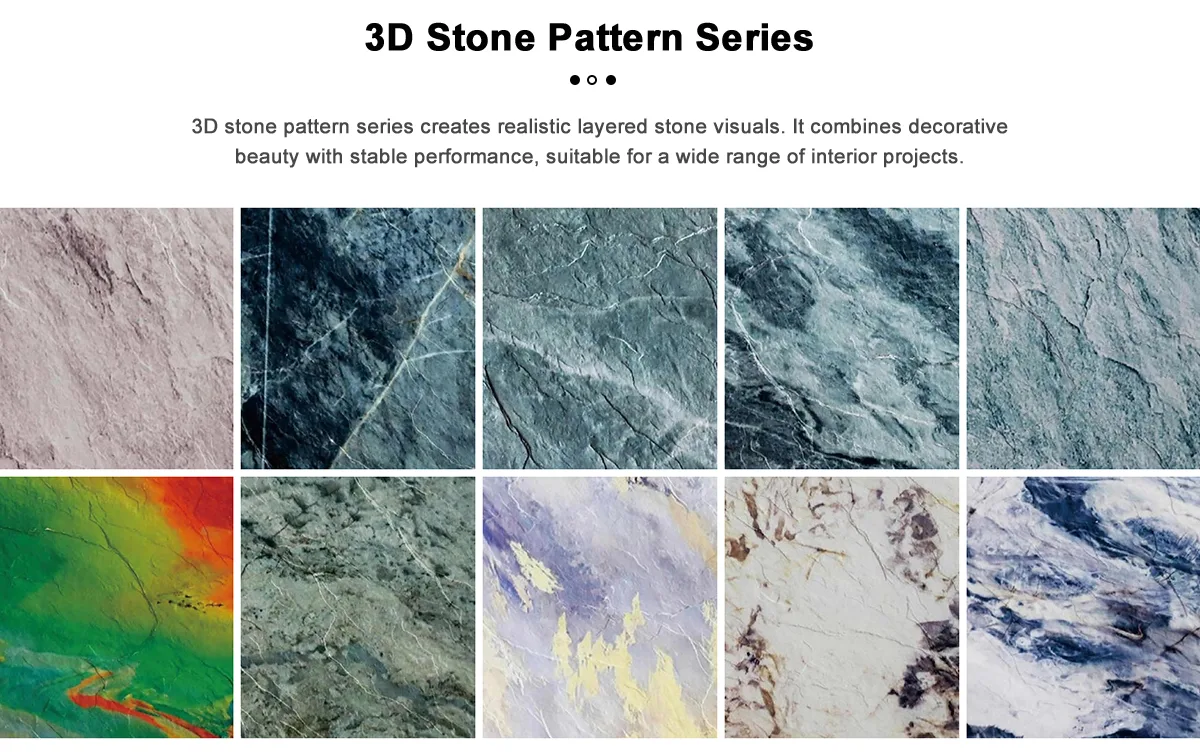
Pigments/Masterbatches: Create realistic patterns (wood grain, stone texture, marble) and vibrant colors.
4. Reinforcement Layers (Optional):
Fiberglass or fabric layers for added tensile strength in high-stress applications.
|
Aspect |
Flexible Stone (Tile) |
Traditional Ceramic/Stone Tile |
|
Weight |
Lightweight (1-3 kg/m²) |
Heavy (5-10 kg/m²) |
|
Flexibility |
Bendable (radius ≥5 cm) |
Rigid, prone to cracking on curves |
|
Installation |
DIY-friendly, no mortar needed |
Requires professional tiling skills |
|
Cost |
40-80% cheaper than natural stone |
Higher material and labor costs |
|
Design Versatility |
Realistic prints, customizable patterns |
Limited to fixed shapes and textures |

You Might Also Like
Send Inquiry